
- What are KPI’s?A Key Performance Indicator is a measurable value that demonstrates how effectively a company is achieving key business objectives.
- What is your desired outcome?
- Why does this outcome matter?
- How are you going to measure progress?
- How can you influence the outcome?
- Who is responsible for the business outcome?
- How will you know you’ve achieved your outcome?
- How often will you review progress towards the outcome?
Key Performance Indicators (KPIs) are the critical (key) indicators of progress toward an intended result. KPIs provides a focus for strategic and operational improvement, create an analytical basis for decision making and help focus attention on what matters most. As Peter Drucker famously said, “What gets measured gets done.”
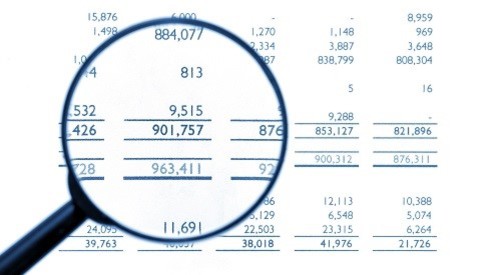
Whether you share a KPI report daily, weekly, monthly, quarterly, annually or all of the above, setting up a good KPI report platform is key to your success. NUMERICAL DATA that will help analyze.
How KPI’s help a company achieve profitability?
Organizations use KPIs at multiple levels to evaluate their success at reaching targets. High-level KPIs may focus on the overall performance of the business, while low-level KPIs may focus on processes in departments such as sales, marketing, HR, support and others.
To put an effective, measurable strategy in place, the number of strategic objectives has to be small. there is a law of diminishing returns:
At a minimum 12 and at a maximum 36. Follow the rules, tried and tested over 20+ years of usage, and you cannot go wrong.
- If I plan to do 1-3 things, I will achieve 1-3 things
- If I plan to do 4-10 things, I might achieve 1 or 2
- If I plan to do more than 10 things, I will achieve nothingWe recommend the SMARTER approach. SMARTER stands for Specific, Measurable, Attainable, Relevant, Time-bound, Evaluate and Reevaluate. (DEVELOPING A KPI)
- Is your objective Specific?
- Can you Measure progress towards that goal?
- Is the goal realistically Attainable?
- How Relevant is the goal to your organization?
- What is the Time-frame for achieving this goal?
- How and when will you Evaluate short-term progress?
- How and when will you Reevaluate longer-term progress.
- How KPI’s are used in different situations?
- Strategic Measures track progress toward strategic goals, focusing on intended/desired results of the End Outcome or Intermediate Outcome. When using a balanced scorecard, these strategic measures are used to evaluate the organization’s progress in achieving its Strategic Objectives depicted in each of the following four balanced scorecard perspectives:
- Customer/Stakeholder
- Financial
- Internal Processes
- Organizational Capacity
- Operational Measures, which are focused on operations and tactics, and designed to inform better decisions around day-to-day product / service delivery or other operational functions
- Project Measures, which are focused on project progress and effectiveness
- Risk Measures, which are focused on the risk factors that can threaten our success
- Employee Measures, which are focused on the human behavior, skills, or performance needed to execute strategy
- An entire family of measures, including those from each of these categories, can be used to help understand how effectively strategy is being executed.
Let’s say, for example, that your organization recently started a new product line or expanded overseas. If you don’t update your KPIs, your team will continue to chase targets that don’t necessarily capture the change in tactical or strategic direction.
Consider this list of criteria when building out your key business performance measurement systems:
- Be based on quantities that can be influenced, or controlled, by the user alone or in cooperation with others
- Be objective and not based on opinion
- Be derived from strategy and focus on improvement
- Be clearly defined and simple to understand
- Be relevant with an explicit purpose
- Be consistent (in that they maintain their significance as time goes by)
- Be specific and relate to specific goals/targets
- Be precise – be exact about what is being measured
- Provide timely and accurate feedback
- Reflect the “business process” – i.e. both the supplier and customer should be involved in the definition of the measure
- Strategic Measures track progress toward strategic goals, focusing on intended/desired results of the End Outcome or Intermediate Outcome. When using a balanced scorecard, these strategic measures are used to evaluate the organization’s progress in achieving its Strategic Objectives depicted in each of the following four balanced scorecard perspectives:
SOURCES:
What is a KPI? Definition, Best-Practices, and Examples. (n.d.). Retrieved March 1, 2020, from https://www.klipfolio.com/resources/articles/what-is-a-key-performance-indicator
How many KPIs do I need? (fewer than you think). (2017, August 2). Retrieved March 1, 2020, from https://www.intrafocus.com/2016/01/how-many-kpis-do-i-need/
KPI Basics. (n.d.). Retrieved March 1, 2020, from https://kpi.org/KPI-Basics/KPI-Basics



 jacintaspblstudy.blog